
Where to Find the Best Hot Apple Cider in Seattle
Hot apple cider has been the go-to way to warm up in the fall for over a thousand years — since long before "pumpkin spice" was a marketing category, English villagers were pouring hot spiced cider over toast to bless apple trees for next year's harvest.
In this article
Hot apple cider has been the go-to way to warm up in the fall for over a thousand years — since long before “pumpkin spice” was a marketing category, English villagers were pouring hot spiced cider over toast to bless apple trees for next year’s harvest.
This rounds up where to actually find good hot apple cider around Seattle, plus what makes the drink what it is and where the tradition comes from — useful context for a drink that gets lumped in with “cozy fall drinks” generally without much explanation of why it’s the one that’s stuck around the longest.
What Is Hot Apple Cider, and Where Did It Come From?
In the U.S., “apple cider” almost always means unfiltered, unsweetened apple juice — cloudier and less processed than the clear apple juice on a grocery shelf, and non-alcoholic unless it’s specifically labeled “hard cider.” Hot apple cider is that same juice, warmed and typically spiced with cinnamon, cloves, allspice, or orange peel. It’s distinct from mulled cider, which is the same idea with alcohol added back in, and from a pumpkin spice latte, which is coffee-based rather than apple-based despite showing up on the same fall menus.
The tradition traces back to a British drink called wassail — from the Old Norse ves heill, “be in good health.” Wassailing was a medieval English ritual, historically tied to Twelfth Night in early January, where villagers went door to door singing and drinking to their neighbors’ health, or gathered at orchards to sing directly to apple trees and encourage a good harvest the following year. The drink itself started as warmed mead with roasted crab apples, evolved into a mulled cider spiced with sugar, cinnamon, ginger, and nutmeg, and was traditionally served from a shared bowl topped with slices of toast. Modern hot apple cider is a simplified, non-alcoholic descendant of that same drink — the toast and the communal bowl are gone, but the cinnamon and cloves stuck around.
Where to Find It in Seattle
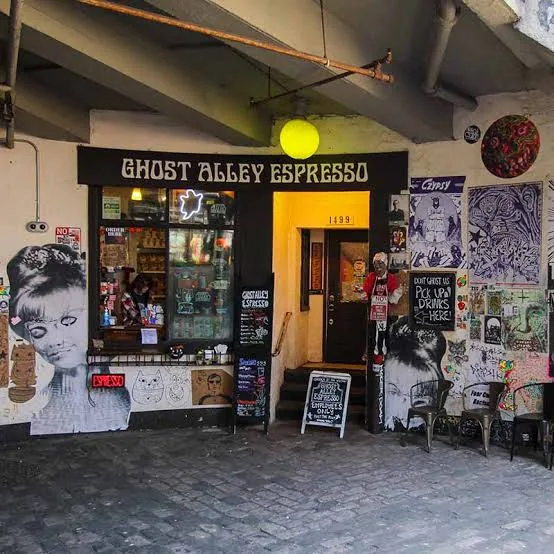
Ghost Alley Espresso — Pike Place Market
Tucked underneath the Pike Place Fish Market and next to the Gum Wall, this small espresso stand has been running its fall menu since early September in past years, with drinks like a Pumpkin Spice Toffee Latte made using spices from Seattle’s own Whole Spice company. It’s more coffee-forward than straight cider, but it’s one of the most atmospheric stops on this list — dim, narrow, and tucked into the market’s stranger corners.
Post Alley, Pike Place Market, Seattle. Espresso drinks typically $5–$7.
Tiny’s Organics Apple Cider — Pike Place Market
A market staple year-round, with a stand located just outside the market proper, across from Beecher’s Cheeses. Their cold-pressed apple cider is sold cold most of the year, but transforms into a warm spiced drink once fall hits — about as close to the traditional, unadorned version of the drink as you’ll find in the city, without lattes or toffee syrup involved.
Outside Pike Place Market, across from Beecher’s Handmade Cheese, Seattle. Check current pricing at the stand.
El Diablo Coffee Co. — Queen Anne
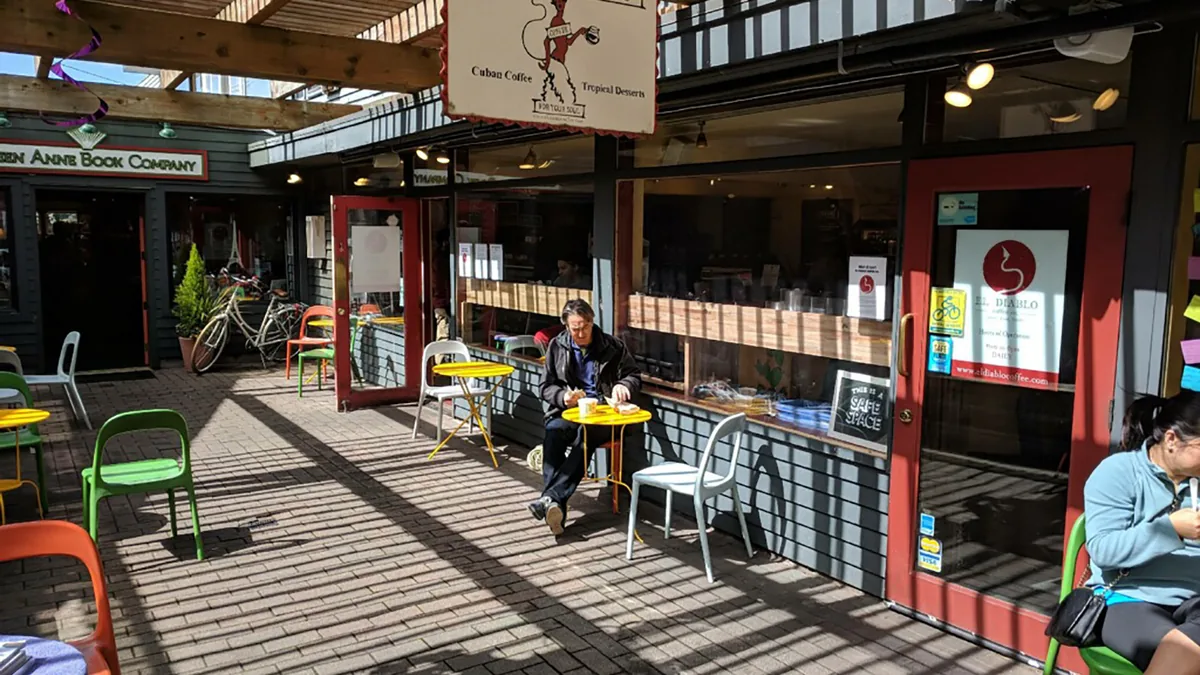
Home to “The Chaider,” a half-cider, half-house-chai hybrid that splits the difference between the two classic fall drinks rather than picking one. If you want something with more heat, their Spicy Theo Mocha adds cayenne to a mocha made with Seattle’s own Theo Chocolate.
Queen Anne, Seattle. Check current hours and menu.
The Station — Beacon Hill
A neighborhood coffee shop known for going off the standard fall-drink script. The Snickerdoodle — vanilla and real cinnamon steamed into the milk — isn’t always on the printed menu, but it’s worth asking for. Their Mexican Mocha brings real spice heat if a straight cider feels too mild.
Beacon Hill, Seattle. Check current hours and menu.
Zeitgeist Coffee — Pioneer Square
Their fall pumpkin spice latte stands out for one specific reason: it’s made from real pumpkins grown in Gig Harbor, not a syrup base — a small distinction, but a real one if you’ve had enough syrup-based versions to taste the difference.
Pioneer Square, Seattle. Check current hours and menu.
Straight From the Source: Snohomish Pumpkin Patches
For cider in its most literal setting, the pumpkin patches north of Seattle sell hot cider and cider donuts alongside the hayrides and corn mazes — Bob’s Corn & Pumpkin Farm and Craven Farm both included cider and donut stands as part of their fall festival setup in past seasons. It’s less about a single best cup and more about the setting: cold air, a hay bale to sit on, and cider that was probably pressed from apples grown nearby. [INTERNAL LINK: Only in October: What You Should Not Miss in Seattle]
Snohomish-area farms, roughly 30 miles northeast of Seattle. Cider and donuts typically sold separately from general admission.
Frequently Asked Questions
Is apple cider the same as apple juice?
Not quite — cider is typically unfiltered and unpasteurized in its traditional form, giving it a cloudier appearance and a more textured flavor than clear, filtered apple juice, though both are non-alcoholic unless otherwise labeled.
What’s the difference between cider and hard cider?
In the U.S., “cider” alone means non-alcoholic apple juice; “hard cider” is the fermented, alcoholic version. In the U.K., “cider” by itself usually refers to what Americans would call hard cider.
What is wassail, exactly?
Wassail is the English mulled-cider drink that hot apple cider descends from, traditionally tied to a Yuletide ritual of visiting orchards and singing to apple trees to ensure a good harvest.
Where’s the most traditional, least-doctored cider in Seattle?
Tiny’s Organics’ stand outside Pike Place Market sells cold-pressed cider that’s warmed and spiced simply, without the lattes, toffee, or chai mixed in that some of the coffee-shop versions add.
Is hot apple cider always non-alcoholic?
The plain drink is, but many recipes — and some Seattle bars during fall — offer a version with bourbon, rum, or brandy added, closer to the original mead-and-mulled-ale roots of wassail.
Pike Place Market alone covers two very different versions of the drink within a few minutes’ walk — Tiny’s for something closer to the traditional pressed cider, Ghost Alley for the coffee-shop take. If you’re building a full cozy fall day around it, pair a cider stop with [INTERNAL LINK: 9 Coziest Date Ideas in Seattle This October] for the rest of the itinerary.
References
- “Wassail,” Wikipedia: https://en.wikipedia.org/wiki/Wassail
- “Mulled Cider,” Spices Inc.: https://spicesinc.com/recipes/mulled-cider
- Old-Fashioned Mulled Cider / Wassail history, The Seasoned Mom: https://www.theseasonedmom.com/?p=75873
- Cider Spices Wassail Kit history note, Plimoth Patuxet Museums shop: https://www.plimoth.com/products/cider-spices-wassail-kit
- “A Fall Guide to Pike Place Market,” Seattle Spectator: https://seattlespectator.com/?p=14954
- “Seattle’s fall coffee shop drinks that are not pumpkin spice lattes,” The Evergrey: https://theevergrey.com/seattles-fall-coffee-shop-drinks-not-pumpkin-spice-lattes/
- “Spice, Spice, Baby” (Seattle Cider Company pumpkin cider), Seattle Met: https://www.seattlemet.com/eat-and-drink/2021/10/pumpkin-spice-in-seattle-2021
- “Explore the Best Pumpkin Patches Near Seattle,” Seattle’s Child: https://www.seattleschild.com/find-the-perfect-pumpkin-patch-for-your-family/