Queen Anne Itinerary: Seattle’s Best Skyline View
A single day on Queen Anne Hill covers eight stops — Seattle's most photographed skyline view, a Victorian-era mansion walk, the ghost of a century-old funicular streetcar system, and the grounds of the 1962 World's Fair.
In this article
Queen Anne is really two neighborhoods stacked on top of each other. The hilltop holds a quiet, wealthy stretch of Victorian mansions and the best of Seattle skyline views. The bottom holds a dense entertainment district built for a World's Fair. This curated Queen Anne itinerary shows you the glamour of the neighborhood in a day.
The street connecting them, Queen Anne Avenue, used to require an underground cable and a 16-ton counterweight just to get streetcars up the grade. That detail tells you everything about how steep this walk actually is.
Start at the top for the view, work your way down through history, and end at Seattle Center, where the day closes out among some of the city's most recognizable landmarks.
Morning: The Top of the Hill at Kerry Park
Kerry Park: the most photographed Seattle Skyline
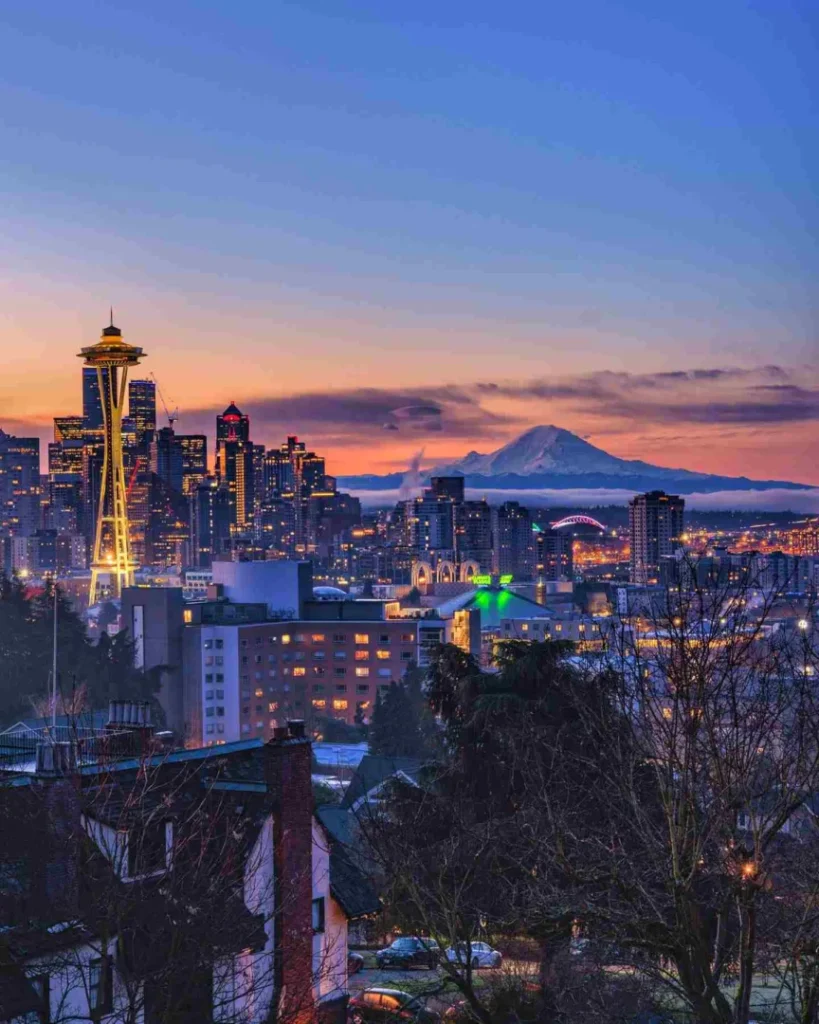
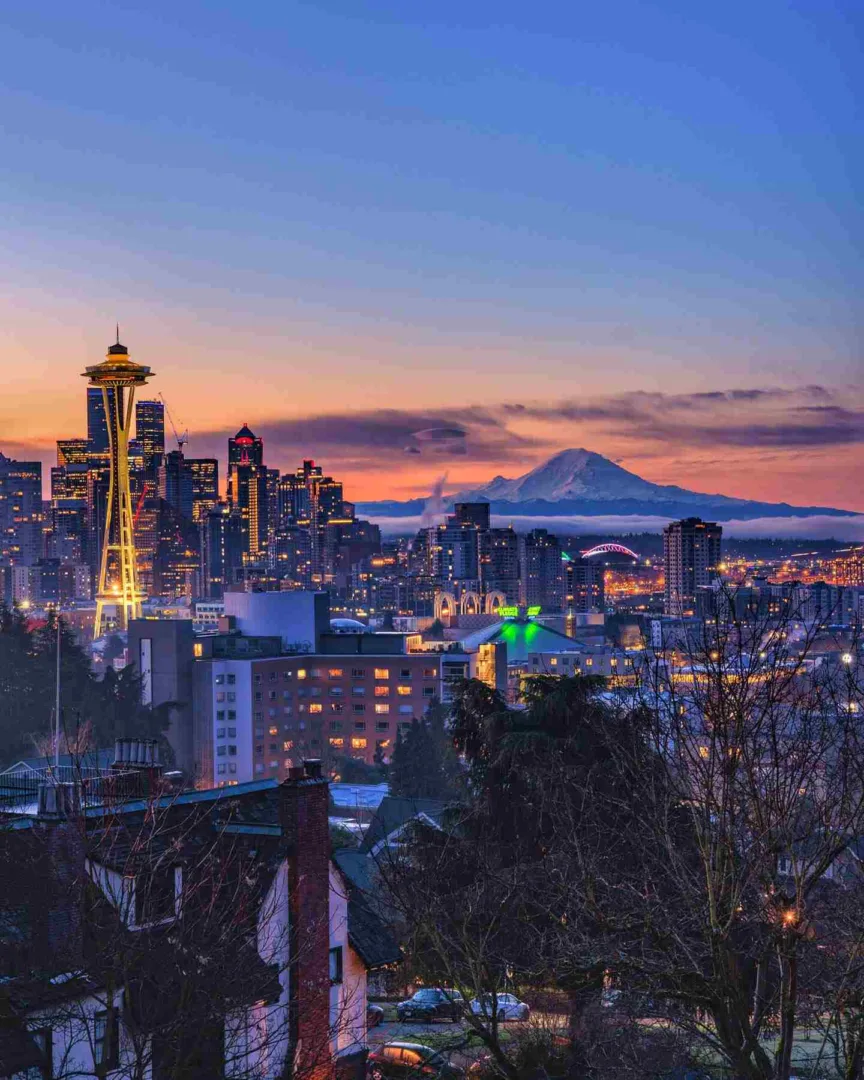
211 W Highland Dr. Arrive as close to sunrise as you can manage. This small hillside park is the source of nearly every postcard image of Seattle's skyline — the Space Needle, downtown's towers, and Elliott Bay laid out below, with Mount Rainier appearing on clear days like it was placed there deliberately.
Mornings mean thinner crowds and a real shot at street parking, which disappears fast once the day gets going. The light is also flatter and cooler than the golden-hour version everyone photographs at sunset — a genuinely different, quieter take on the same view.
Betty Bowen Viewpoint
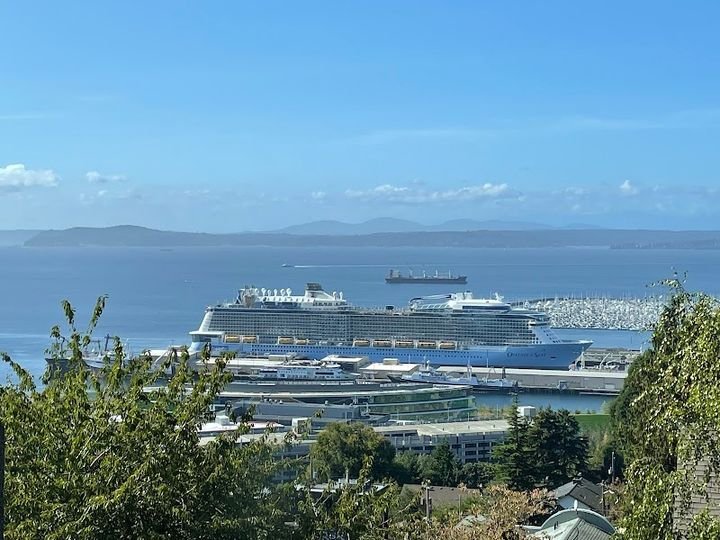
Marshall Park, a short walk west along Highland Drive. This second, less-visited viewpoint looks the opposite direction from Kerry Park — out over the Interbay railyard, the Magnolia Bridge, and the Olympic Mountains across the Sound.
It's a working port view rather than a skyline view, and on a sunny day it's arguably the more dramatic of the two, with a fraction of the visitors.
The Highland Drive Mansion Walk
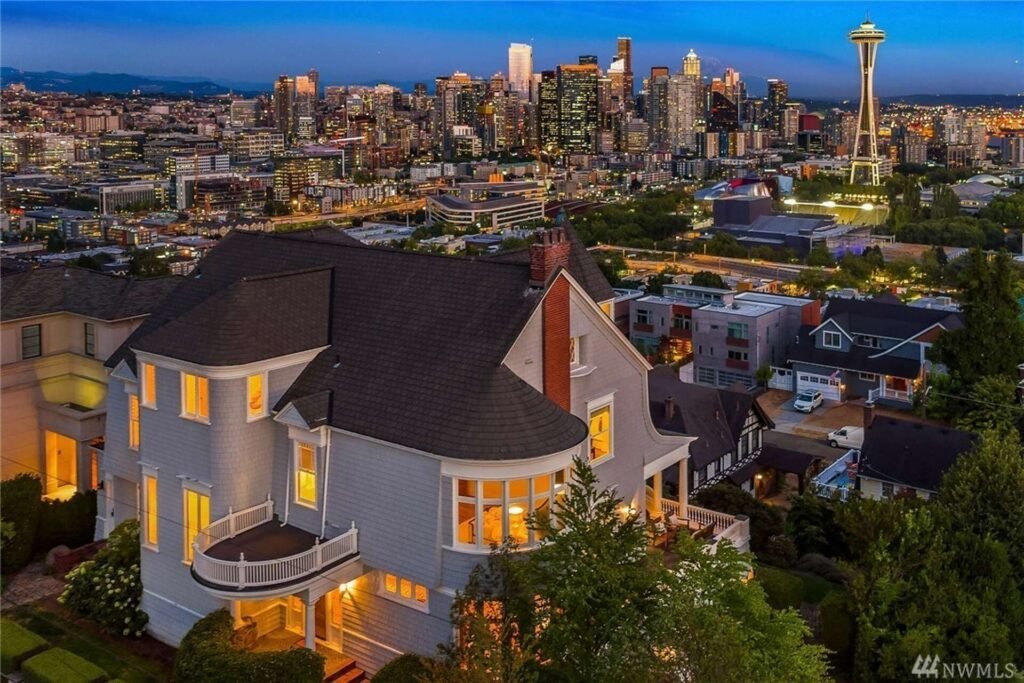
Continue along Highland Drive and the surrounding blocks, lined with the Victorian and Colonial Revival homes that gave the neighborhood its name. A wave of "Queen Anne style" houses went up when electric streetcars first made the steep hilltop livable at the turn of the 20th century.
Look for:
- The Ballard/Howe House — built in 1901, listed on the National Register of Historic Places. It's a private residence, but fully visible and admirable from the sidewalk.
- Parsons Gardens — a small, privately funded public garden tucked into the residential blocks.
One honest note: if your day is genuinely short on time, stops 1-3 can be trimmed to Kerry Park alone. Betty Bowen and the mansion walk add texture, but Kerry Park is the one view worth building the morning around.
Midday: Coffee and the Counterbalance
Caffe Vita
Queen Anne Ave N. Stop for a cappuccino or cold brew at this longtime neighborhood café near the top of the hill — a reasonable place to sit down before the day's steepest walking begins.
Queen Anne Avenue and the Counterbalance Trolley
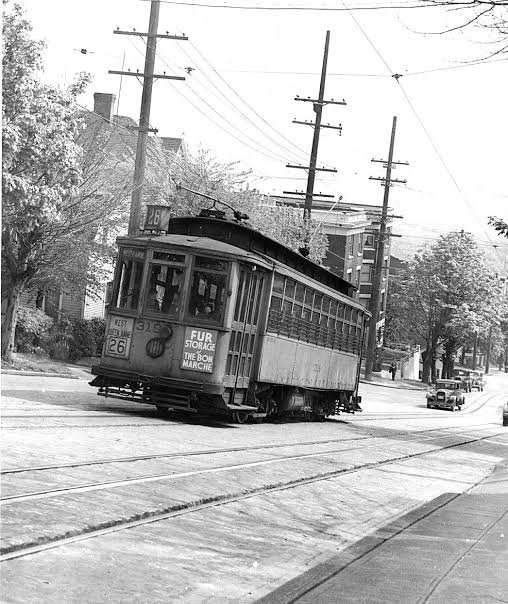
Walk south down Queen Anne Avenue, and you're retracing a genuinely unusual piece of transit history. Between 1901 and 1940, this stretch of road — the steepest part of the hill, at roughly a 20 percent grade — used an underground tunnel system with a 16-ton concrete counterweight to help electric streetcars climb and brake.
Attendants stationed in curbside boxes at the top and bottom hooked and unhooked the cable by hand for every single car. The system was scrapped for buses in 1940 and the tunnels were removed a few years later, but the name stuck. Locals still call this stretch of the avenue "the Counterbalance" — a detail almost no first-time visitor knows to look for.
Afternoon: Seattle Center
International Fountain
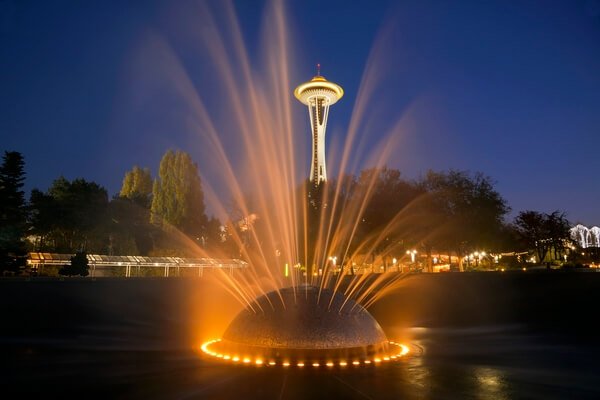
Seattle Center. Continue down into Lower Queen Anne to Seattle Center, built for the 1962 World's Fair. The International Fountain, designed by Japanese architects Hideki Shimizu and Kazuyuki Matsushita for the fair and rebuilt in 1995, runs more than 270 water jets through programmed cycles set to music that changes roughly twice a month.
It's free to walk around, genuinely fun to watch the choreography build to its bigger bursts, and one of the only spots on this list where kids can get soaked on a warm day at no cost.
Space Needle and Chihuly Garden and Glass
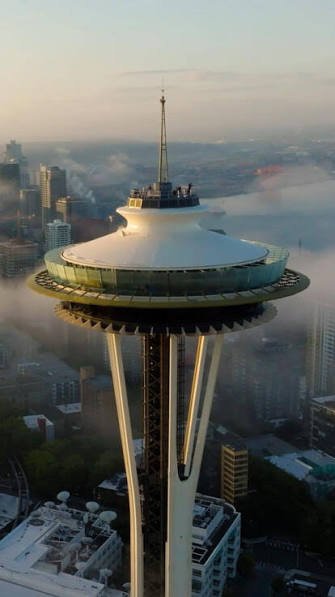
The Space Needle, opened April 21, 1962 for the fair's opening day, stands 605 feet tall and was the tallest structure west of the Mississippi when it was built. An elevator ride to the 520-foot observation deck takes about 41 seconds.
Immediately next to it, Chihuly Garden and Glass houses glass artist Dale Chihuly's work in a 40-foot glasshouse and outdoor garden, including a suspended installation roughly 100 feet long.
One honest note: both are paid attractions — the Space Needle and Chihuly Garden and Glass each carry separate admission, and combined tickets add up fast. If the budget doesn't stretch that far, both structures are still worth seeing and photographing from the surrounding public plaza at no cost; the International Fountain gives one of the better free angles on the Needle itself.
Evening: Dinner at a Neighborhood Institution
Mecca Cafe
526 Queen Anne Ave N. Close the day at one of Seattle's oldest continuously operating diners, opened in 1930 by Preston and Frances Smith at the tail end of Prohibition and still serving a full menu into the early morning hours.
It's an unpretentious, ketchup-on-the-table kind of place — burgers, classic diner fare, and a long bar on one side of the room. A deliberate contrast after a day spent mostly among views and glasswork.
Getting There and Getting Around
Queen Anne doesn't have its own Link light rail station, but a few transit options cover the route:
- RapidRide D Line — runs directly up Queen Anne Avenue from downtown, roughly tracing the old Counterbalance streetcar route
- Other King County Metro routes — connect the hilltop to Seattle Center and downtown
- Seattle Center Monorail — built for the 1962 World's Fair, connects Seattle Center directly to Westlake Center downtown in about two minutes
- By car — street parking near Kerry Park is tightest midday and easiest at sunrise; Seattle Center has paid garage parking
This itinerary covers real elevation change. Stops 1 through 5 sit atop the hill; stops 6 through 8 sit at the bottom, connected by the same grade the old counterbalance system was built to handle. Walking the whole thing means one sustained downhill stretch rather than a flat route — comfortable shoes matter more here than on a typical downtown day.
Frequently Asked Questions
How many stops are in this itinerary, and how much walking does it involve?
Eight stops, connected by one continuous downhill walk from the top of Queen Anne Hill to Seattle Center — roughly a mile and a half point to point, plus whatever extra distance the mansion walk (stop 3) adds.
Is Kerry Park worth visiting more than once in a day?
Many locals treat it as both a sunrise and sunset spot, since the light and crowd levels differ completely between the two. This itinerary only covers the morning visit, but sunset draws a much bigger crowd if you want to compare.
Do I need tickets for anything on this list?
Only the Space Needle and Chihuly Garden and Glass (stop 7) require paid admission. Read more about the CityPASS or C3 Comparison. Every other stop, including the International Fountain and both viewpoints, is free.
Is this itinerary walkable for kids or those with mobility concerns?
The hilltop stops (1-5) involve flat or gently sloped sidewalks. The descent to Seattle Center (stops 6-8) is a sustained steep grade that's manageable on foot but worth planning around — the RapidRide D Line bus can cover that stretch instead.
What's the best time of year for the Kerry Park view?
Clear days matter more than season — Mount Rainier only appears in the background when visibility is good, which is more consistent in summer but not guaranteed any time of year.
The Takeaway
Eight stops, one steep street, and a neighborhood that shows off two completely different sides of Seattle in a single walk — Victorian hilltop charm giving way to World's Fair spectacle by the time you reach the bottom. Start at Kerry Park before the crowds, and let gravity carry you the rest of the way. If you've got a second day, pair this with a walk through the International District for a very different slice of the city.
References
- Kerry Park, Year of Seattle Parks: https://www.yearofseattleparks.com/?p=398
- Marshall Park and Betty Bowen Viewpoint, Year of Seattle Parks: https://www.yearofseattleparks.com/?p=396
- Seattle Landmarks: Ballard/Howe House (1901), HistoryLink: https://historylink.org/File/3197
- Ballard-Howe House, Wikipedia: https://en.wikipedia.org/wiki/Ballard-Howe_House
- Parsons Gardens Park, Wikipedia: https://en.wikipedia.org/wiki/Parsons_Gardens_Park
- Parsons Gardens, Seattle Parks and Recreation: https://www1.seattle.gov/parks/allparks/parsons-gardens
- Queen Anne Counterbalance Streetcar (Seattle), HistoryLink: https://www.historylink.org/File/20746
- Counterbalance & Streetcars, Queen Anne Historical Society: https://www.qahistory.org/articles/counterbalance-streetcars
- International Fountain, Seattle Center: https://seattlecenter.com/explore/attractions/international-fountain
- Space Needle, Wikipedia: https://en.wikipedia.org/wiki/Space_Needle
- Chihuly Garden and Glass at Seattle Center, Inspired Imperfection: https://inspiredimperfection.com/adventures/chihuly-garden-and-glass-at-seattle-center
- Mecca Cafe, Wikipedia: https://en.wikipedia.org/wiki/Mecca_Cafe
- Our Roots in Seattle, Mecca Cafe: https://www.mecca-cafe.com/our-story
- Seattle Center Monorail FAQ: https://seattlemonorail.com/faq
- RapidRide D Line, Wikipedia: https://en.wikipedia.org/wiki/RapidRide_D_Line
- Seattle/Queen Anne-South Lake Union, Wikivoyage: https://en.wikivoyage.org/wiki/Seattle/Queen_Anne-South_Lake_Union