Franklin Falls: A Secret Winter Wonderland
Most "easy hikes near Seattle" lists mention Franklin Falls as a quick, flat waterfall walk — which it is, for about half the year. The other half, the access road closes, the trail buries itself under packed snow and ice, and the whole experience transforms into something closer to a backcountry expedition.
In this article
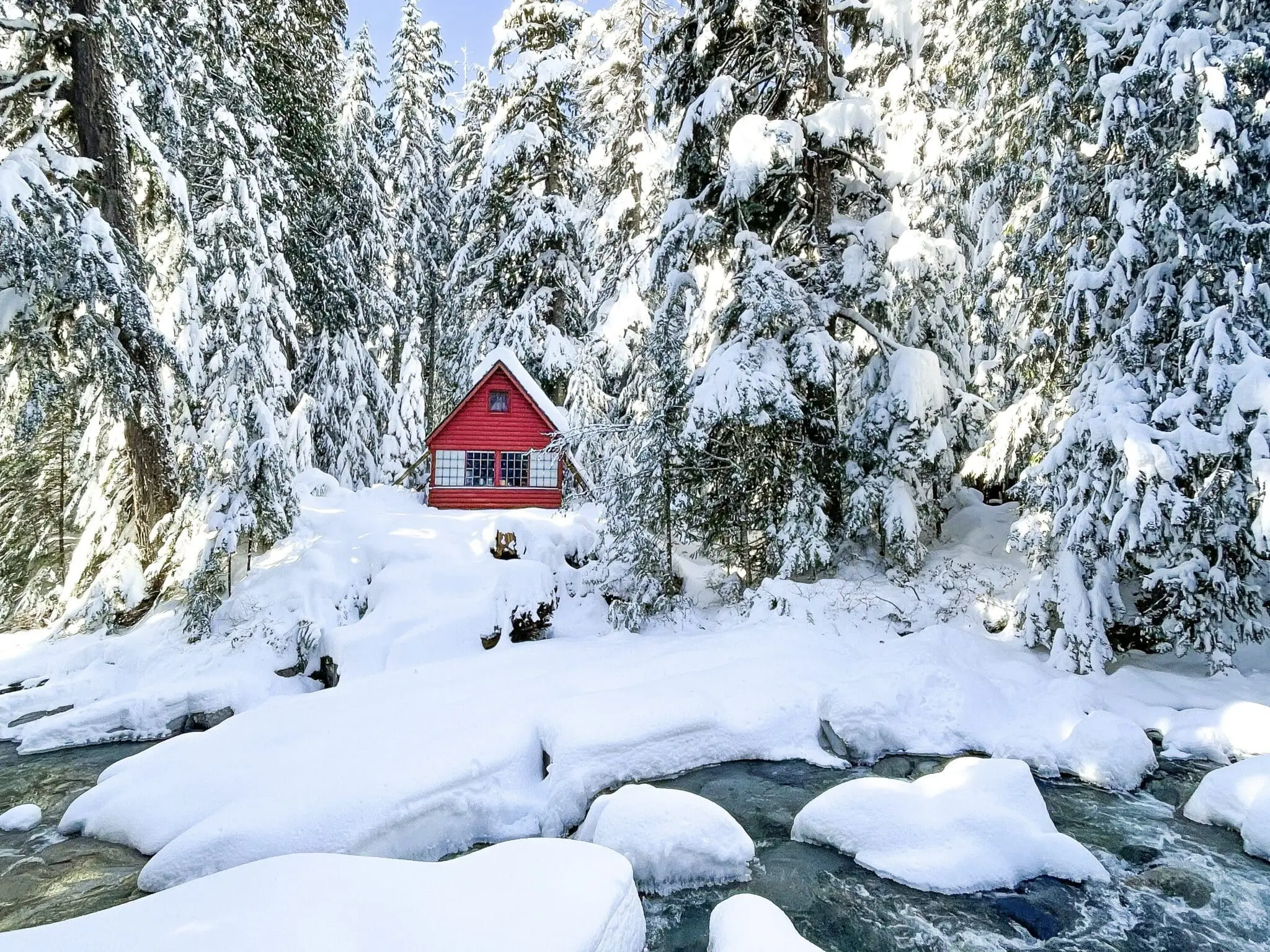
Picture this: your breath fogging in front of you, ice crunching under your boots with every step, and somewhere ahead, through the trees, the sound of water still moving beneath a curtain of ice. Franklin Falls in winter is a true Cascade winter wonderland near Snoqualmie Pass, about 55 minutes from Seattle. It is not the easy afternoon stroll it is in July. It is a real winter hike that rewards anyone willing to earn it, and one of the most underrated entries on a Pacific Northwest winter bucket list.
Most "easy hikes near Seattle" lists mention Franklin Falls as a quick, flat waterfall walk — which it is, for about half the year. The other half, the access road closes, the trail buries itself under packed snow and ice, and the whole experience transforms into something closer to a backcountry expedition: roughly 7 miles round trip instead of 2, ice climbers scaling the frozen rock face at the falls, and a genuine sense that you've gone somewhere most people never bother to see this way. If you want a winter hike that actually feels like an adventure rather than a scenic walk, this is it.
What to Expect
The Trail Becomes a Different Hike Entirely
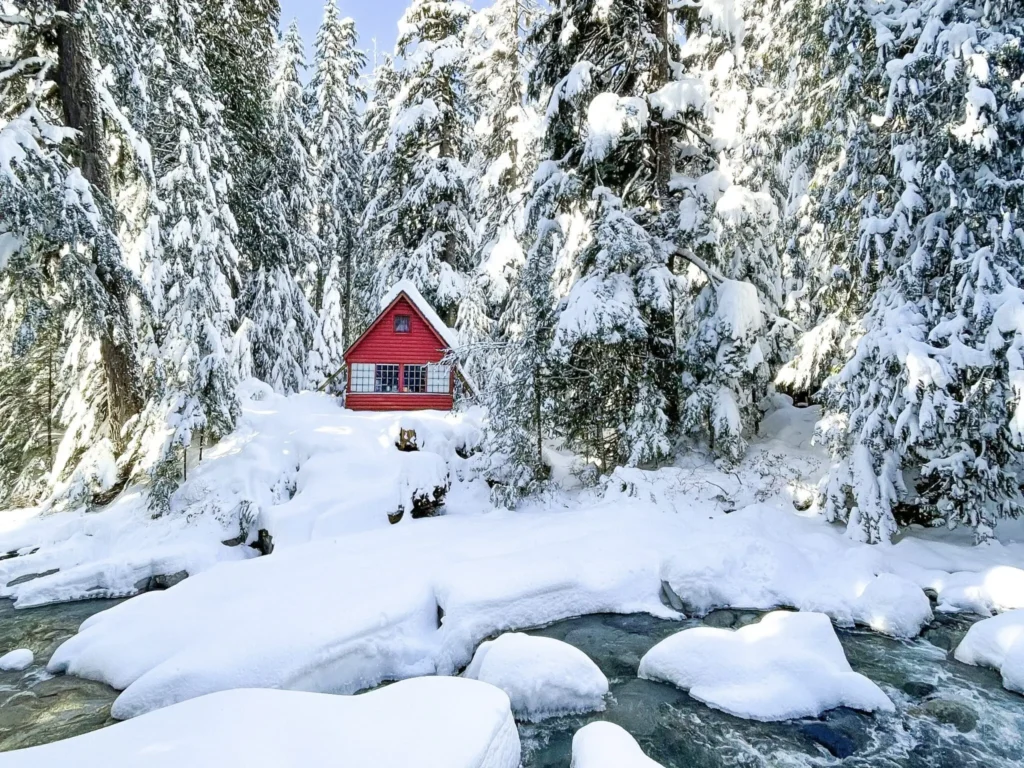
The moment you step past the closed gate at Denny Creek Road, the character of the hike shifts. What's a short, flat, family-friendly path in summer becomes a genuine winter trek — roughly 3.5 miles one-way from the Asahel Curtis Sno-Park to the falls, through forest gone quiet and white, past a little red cabin standing alone against the snow. The extra distance isn't a drawback; it's what turns this into something you remember. Every step further from the highway is a step deeper into a version of the Cascades most casual visitors never bother to see.
Ice Underfoot, Ice Overhead: a True Winter Wonderland
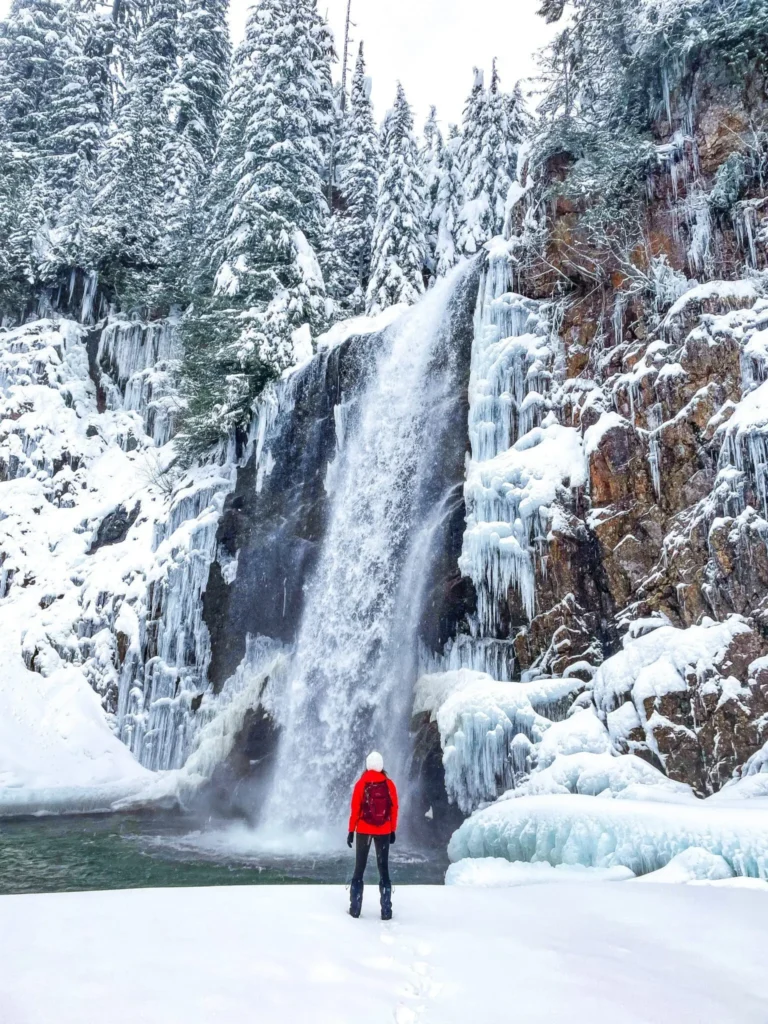
Recent winters have left the road and trail glazed in packed snow and ice rather than soft powder — the kind of surface where microspikes go from optional gear to essential equipment. The final approach to the falls, where stone steps drop toward the water, turns genuinely slick, and there's a real thrill in picking your way down carefully, knowing the payoff is close. And the payoff is real: icicles cling to the rock face in formations dramatic enough that, in a hard enough freeze, ice climbers rope up and scale the falls directly, working routes rated WI3 to WI5 on frozen water that was just a summer creek months earlier. Even if you're only there to look, standing beneath that much suspended ice is the kind of moment a phone photo barely captures.
Respect the Mountain
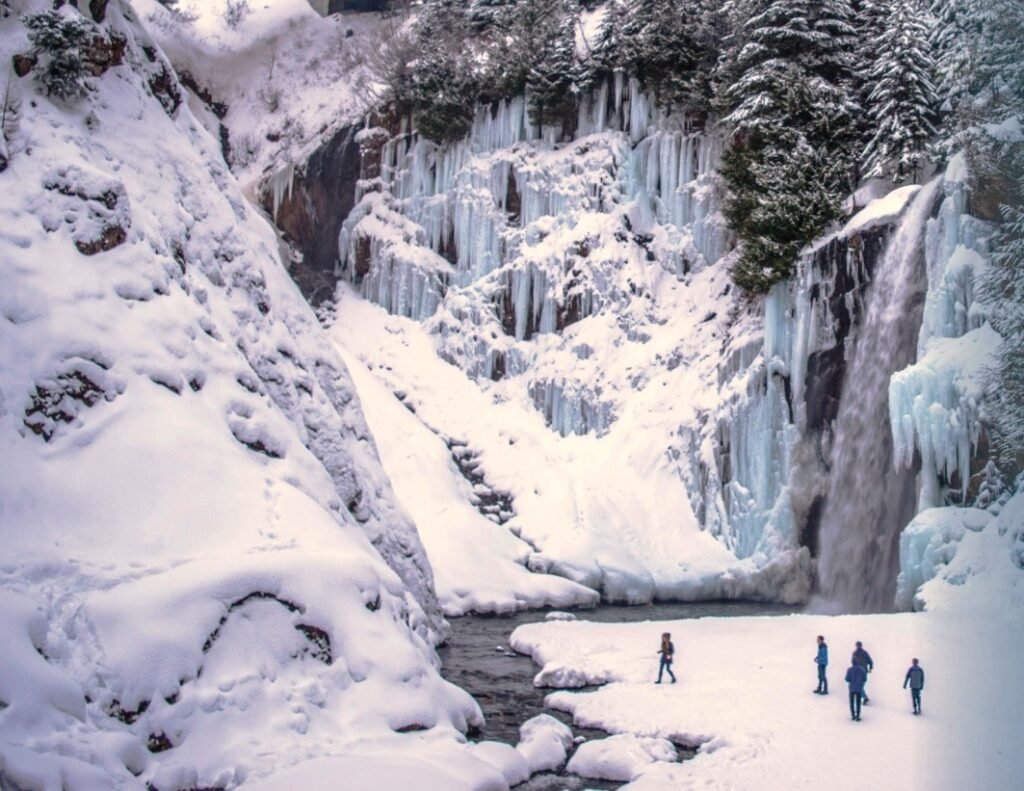
Part of what makes this feel like a real adventure rather than a groomed tourist stop is that it demands real respect. The falls sit at the base of a documented avalanche chute, and winter trip reports consistently flag "considerable" avalanche danger in the area directly beneath it. That's not a reason to skip it — it's a reason to prepare properly: check the forecast, bring the right gear, and treat the basin at the bottom of the falls as a look-don't-linger spot rather than a place to set up a picnic.
The Backstory
Franklin Falls earned its reputation as one of the most-hiked waterfalls in the Snoqualmie Pass corridor because the summer version is almost absurdly accessible — flat, short, right off I-90. That accessibility disappears completely once Washington's Sno-Park system takes over for the season and the Forest Service stops plowing Denny Creek Road. The trail doesn't get any less beautiful in winter — if anything, it gets more dramatic — but it stops being a trail for everyone and starts being a trail for people willing to actually plan a winter outing. That shift is exactly what makes it worth putting on a bucket list rather than just a to-do list.
Getting There
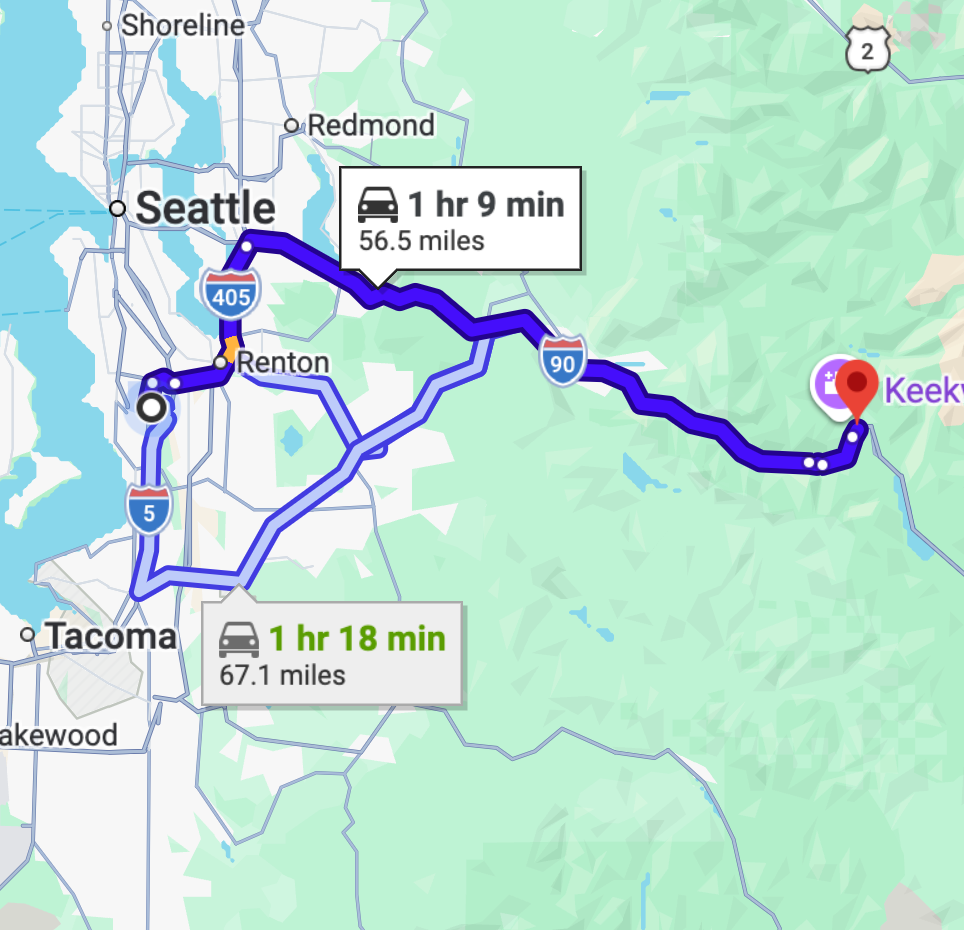
Take I-90 to Exit 47 (Denny Creek/Franklin Falls). In winter, head for the Asahel Curtis Sno-Park rather than the summer trailhead — the Franklin Falls Sno-Park isn't operating for the 2025-2026 season, and Denny Creek Road's gate stays closed to vehicles. From Asahel Curtis, it's about 3.5 miles one-way along the road and trail to reach the falls.
Plan Your Visit
- Distance: ~7 miles round trip in winter (versus ~2 miles in summer)
- Elevation gain: ~800 feet
- Parking pass: A Washington Sno-Park permit — separate from a standard Discover Pass — is required at winter Sno-Park lots roughly November through April. Confirm current requirements on parks.wa.gov before you go.
- Gear: Microspikes, at minimum; some hikers add snowshoes depending on current snow depth, which shifts week to week through the season.
- Safety: Check the Northwest Avalanche Center's forecast (nwac.us) before you leave, and don't linger directly beneath the falls.
- Coordinates: 47.4126, -121.4411. Access in Google Map.
One honest note, even inside all this bucket-list enthusiasm: this is a real winter hike with real consequences if you're underprepared. Bring the gear, check the forecast, and treat it with the same seriousness you'd give any backcountry outing — that respect is part of what makes finishing it feel like an actual accomplishment rather than just a walk with a nice view at the end. But do not worry, there are many more hikes near Seattle under 1 hour from the City.
Frequently Asked Questions
Is Franklin Falls actually worth the extra winter mileage?
For anyone who wants a real sense of accomplishment out of a day hike, yes — the frozen falls and quiet, snow-covered trail are a genuinely different experience from the crowded summer version, and most visitors never see it this way.
Do I need a Discover Pass or a Sno-Park permit?
A Washington Sno-Park permit, separate from a standard Discover Pass, is required at winter Sno-Park lots roughly November through April.
Does the waterfall actually freeze solid?
It flows year-round, but during a hard freeze, ice builds up substantially enough on the surrounding rock that technical ice climbers scale it directly — a genuine spectacle even if you're just there to look.
Is this hike dangerous?
It carries real winter hazards, most notably a documented avalanche chute right at the falls — manageable with proper gear and avalanche-forecast awareness, but not something to treat casually.
Is the Franklin Falls Sno-Park open this winter?
No — for the 2025-2026 season, it's not operating, so plan to start from the Asahel Curtis Sno-Park instead, adding to the total distance.
Check current road and avalanche conditions before you commit to the drive — this is a trail that changes week to week through the season, and part of the adventure is going in prepared rather than surprised. For an easier way to start building a Pacific Northwest hiking habit before you take this one on, Fall Hikes Near Seattle Under 1 Hour From the City covers the gentler, snow-free side of the same trail network.
References
- "Franklin Falls - Winter," Washington Trails Association hiking guide: https://www.wta.org/go-hiking/hikes/franklin-falls-winter
- Trip Report, Franklin Falls - Winter, Dec. 28, 2025, WTA: https://www.wta.org/go-hiking/trip-reports/trip_report-2025-12-28.194736364158
- Trip Report, Denny Creek/Franklin Falls - Winter, Jan. 4, 2026, WTA: https://www.wta.org/go-hiking/trip-reports/trip_report-2026-01-04.181029646238
- Trip Report, Franklin Falls - Winter, Jan. 19, 2020, WTA: https://www.wta.org/go-hiking/trip-reports/trip_report-2020-01-19-6052319224
- "Franklin Falls Ice Climbing" trip report, The Mountaineers: https://www.mountaineers.org/@@resolveuid/b34c7f246fa043528a0f2fc5b2baab86
- "Basic Snowshoe: Franklin Falls," The Mountaineers activity guide: https://www.mountaineers.org/activities/activities/basic-snowshoe-franklin-falls-4
- Franklin Falls Trail overview, The Outbound Collective: https://theoutbound.com/washington/hiking/hike-to-franklin-falls
- Northwest Avalanche Center forecast: https://www.nwac.us