Downtown Seattle’s Must-See Places: 12 Spots Not to Miss Today
Downtown Seattle packs the city’s best-known sights into a few walkable miles, from Pike Place Market and the waterfront to the Space Needle. This guide covers 12 popular places worth your time, with what each costs, how to get there, and when to go.
In this article
If you only have a few days in the Emerald City, or you live here and haven’t played tourist in years, these are Seattle's must-see places that earn their reputation. Most sit within a 20-minute walk of Pike Place Market, and the few that don’t are a short Monorail or streetcar ride away.
You do not need to do all of them. Pick three or four per day and group them by area: the market and waterfront cluster together, as do Pioneer Square and the library. Seattle Center is its own outing. Several of these sights are also bundled into passes, so before you pay full price at every door, check if a pass can cover your vibe. We are also publishing a sister guide to the lesser-known side of downtown, Undiscovered Gems in Downtown Seattle, for when you have seen the classics.
| Place | Area | Typical cost | Best for |
|---|---|---|---|
| Pike Place Market | Market | Free to enter | Food, people-watching |
| Original Starbucks | Market | Price of a coffee | Photo stop |
| Gum Wall | Market | Free | Quirky photo |
| Waterfront and Overlook Walk | Waterfront | Free | Views, walking |
| Seattle Great Wheel | Waterfront | About $16–$18 adults | Skyline and Sound views |
| Seattle Aquarium | Waterfront | Paid; check current rates | Families |
| Seattle Art Museum | Downtown core | Paid; free first Thursdays | Art, rainy days |
| Olympic Sculpture Park | Waterfront north | Free | Outdoor art, sunset |
| Seattle Central Library | Downtown core | Free | Architecture |
| Smith Tower | Pioneer Square | Paid observatory | History, views |
| Seattle Underground Tour | Pioneer Square | Paid | Quirky history |
| Space Needle and Seattle Center | Seattle Center | Paid; check current rates | Classic views |
Prices change, and several attractions use dynamic pricing. Confirm on each official site before you go.
The Market and Waterfront
Pike Place Market: the heart of the tourist spots
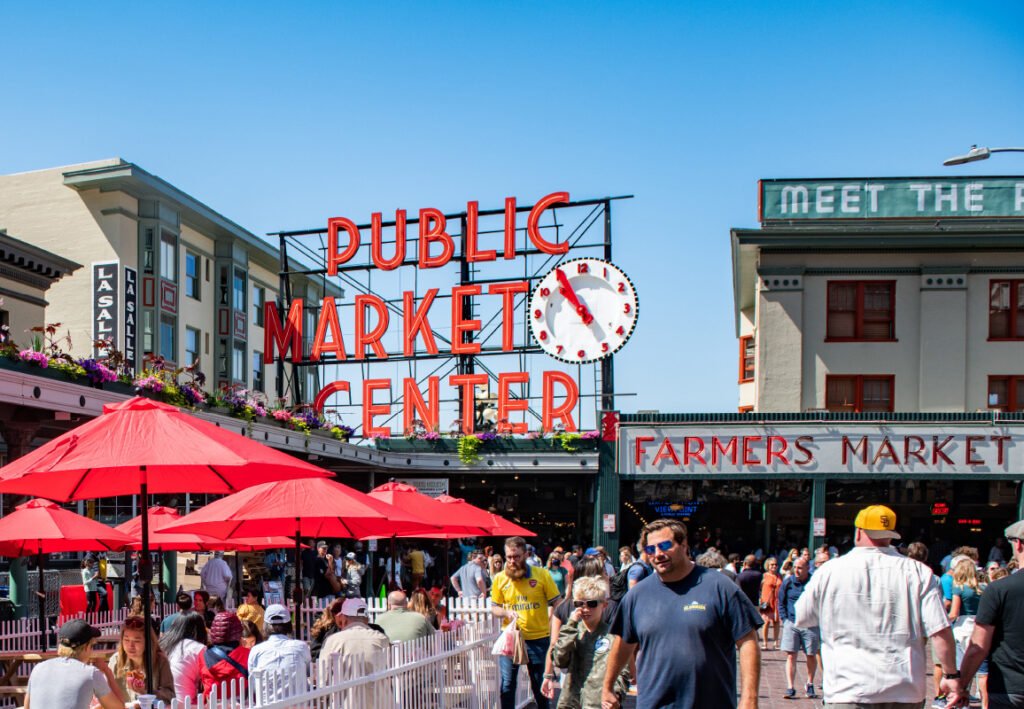
The Pike Place Market is the heart of the tourist spots in Seattle. If you haven't been here, then you haven't seen Seattle at all.
Open since 1907, Pike Place Market is one of the oldest continuously operating public markets in the country, and it is still a working market, not just a tourist set. Fishmongers, produce stalls, flower sellers, craft vendors and dozens of small restaurants fill several levels, and the market itself is free to enter.
Go early. By late morning on a weekend the main arcade is shoulder to shoulder, but at 8 or 9 a.m. you can watch the produce go up and actually talk to the vendors. Buy a snack, not a sit-down meal, and wander into the side corridors and lower levels where the crowds thin out.
- Where: 85 Pike St, at the foot of Pike Street
- Cost: Free to enter; budget for food and souvenirs
- Parking: See our guide to where to park for free or cheap near downtown Seattle
Local Tip: Walk the market from the north end back toward the main entrance, against the flow. You see the stalls head-on and miss the worst of the tour-group crush at the fish-throwing stall.
The Original Starbucks (or the second)
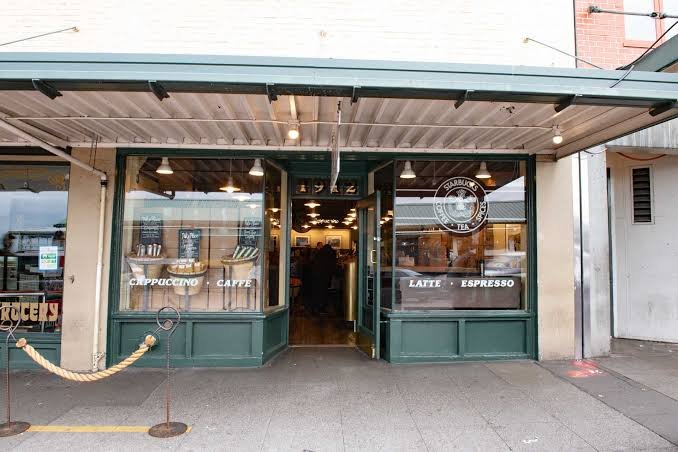
This is a controversial spot- authorities at the Pike Place Market claim this spot to be the first Starbucks, but the locals claim this to be the second, with no direct reference to where the first is. For this discussion, we are respecting the Pike Place authorities and honor this spot as the first Starbucks.
The Starbucks at 1912 Pike Place is the one visitors line up for. The company’s first store opened a few blocks away in 1971, and this location, where Starbucks has operated since the 1970s, is the oldest surviving one, so it is a fair stop for history, even if the coffee is the same as anywhere. The line often wraps around the block, and the shop sells some merchandise found nowhere else.
If the line is long, take a photo of the sign and move on. Better coffee is a few steps away.
- Where: 1912 Pike Pl
- Cost: The price of a drink, free for the photo. No reservation needed.
The Gum Wall
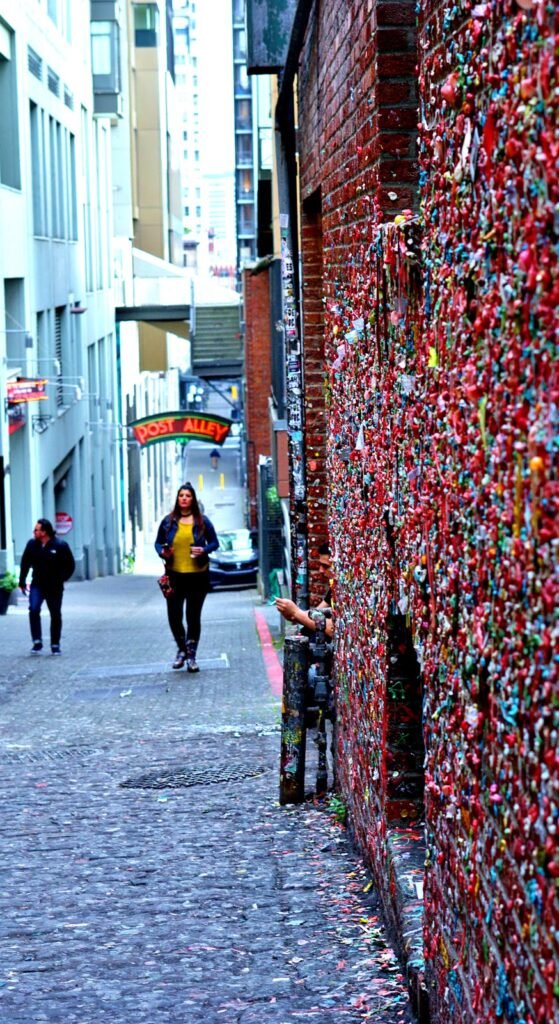
Under the market in Post Alley, a wall of chewed gum has been growing since the 1990s. It is gross, colorful and one of the most photographed spots in the city. The wall is free and takes five minutes.
- Where: Post Alley, beneath the Market Theater
- Cost: Free
Caveat: Bring hand sanitizer, and do not lean against the wall.
The Seattle Waterfront and Overlook Walk
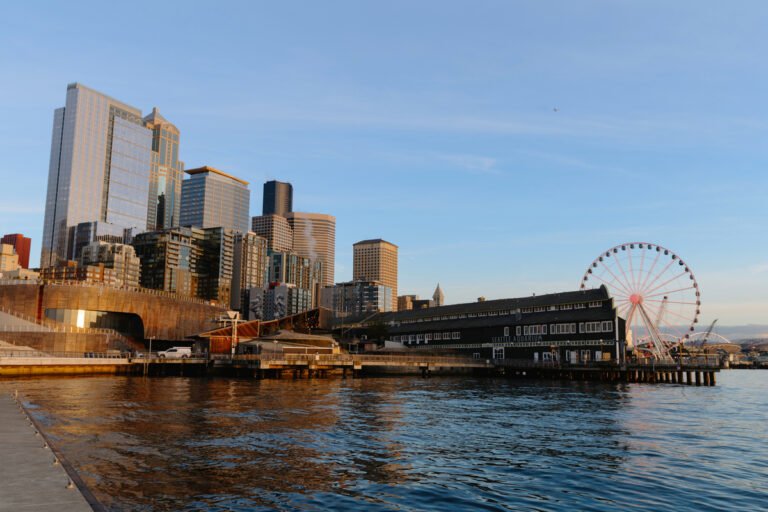
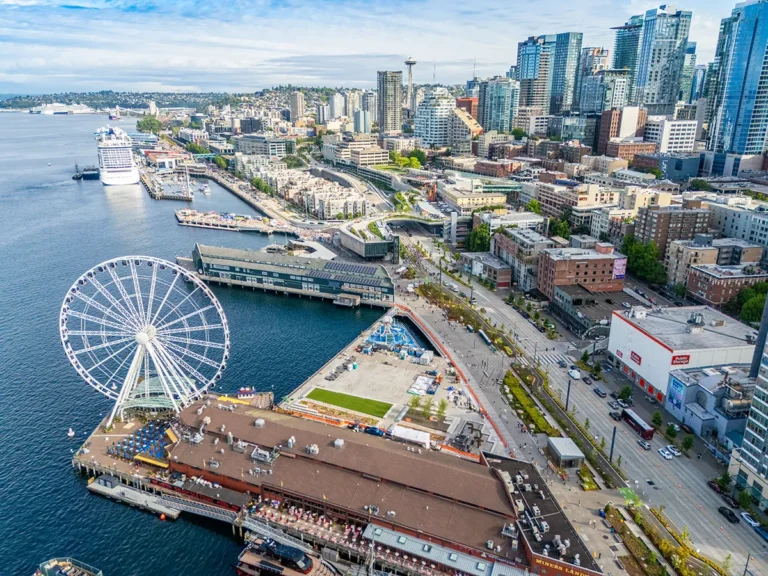
The waterfront has been rebuilt over the last several years, with a wide promenade, a new park along the water and the Overlook Walk, a landscaped path and stairway that links Pike Place Market down to the shoreline. It is free, it is flat and it gives you the best easy views of Elliott Bay and the Olympic Mountains on a clear day.
Walk it from the market down to the water, then south or north along the promenade depending on which attractions you want next.
- Where: Alaskan Way, from Pioneer Square north to Pier 62
- Cost: Free
The Seattle Great Wheel
At 175 feet, the Great Wheel is the tallest Ferris wheel on the West Coast, with 42 enclosed gondolas. A ride takes about 12 to 15 minutes, and adult tickets run about $16 to $18, with children about $11 to $13. Go near sunset for the best light over the Sound.
If you are on a budget, this is the one to skip on a gray day. The views are only good when you can see something.
- Where: Pier 57, 1301 Alaskan Way
- Cost: About $16–$18 adults, $11–$13 kids
By the Numbers: 175 feet tall, 42 gondolas, one ride of roughly 12–15 minutes.
Seattle Aquarium
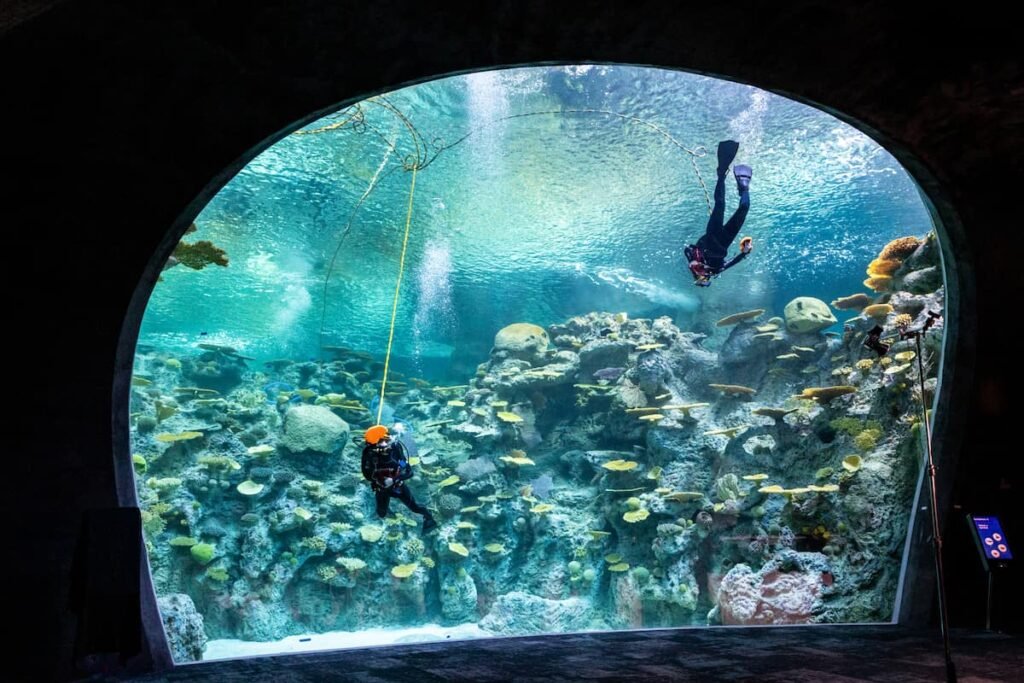
The Aquarium sits on the waterfront at Pier 59 and focuses on Puget Sound and Pacific Northwest marine life: sea otters, seals, a giant Pacific octopus, and a large underwater dome. It is one of the best rainy-day stops downtown, especially with kids.
Tickets are timed and dynamically priced, so buy ahead online rather than at the door. The Aquarium is also part of the Seattle Public Library museum pass program, so check our guide to free Seattle museum visits with library passes before you pay. For other wet-weather ideas, see our indoor spots for kids.
- Where: 1483 Alaskan Way, Pier 59
- Cost: Paid, timed tickets; check current rates
The Downtown Core
Seattle Art Museum
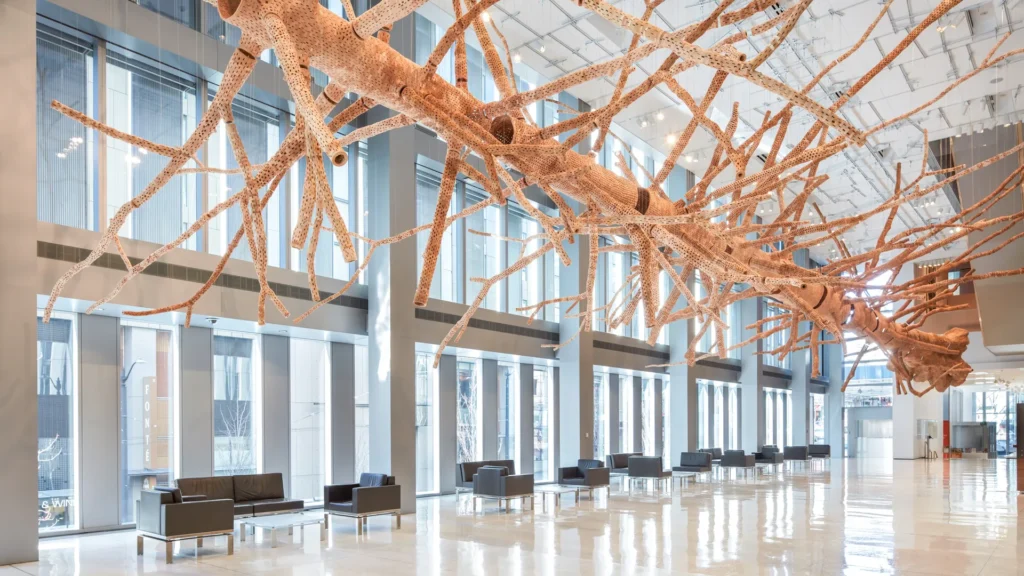
SAM’s downtown building holds a broad collection, from Northwest Coast Native art to European painting and contemporary work. Out front, the 48-foot-tall Hammering Man sculpture has become a landmark of its own. Check the museum’s site before you visit, since the sculpture’s entrance area has been under construction.
SAM offers free admission on certain days, including first Thursday evenings.
- Where: 1300 First Ave
- Cost: Paid general admission; free first Thursdays
Caveat: Confirm current hours and any construction-related entrance changes before you go.
Seattle Central Library
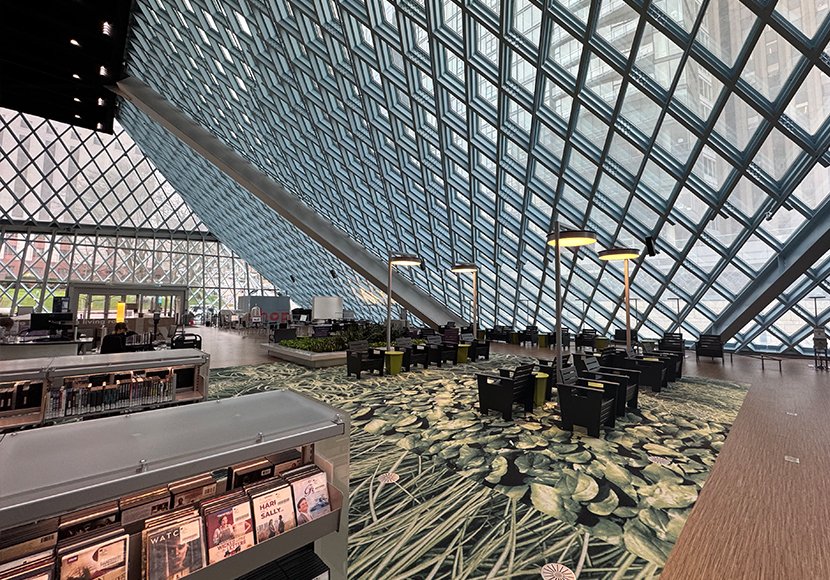
Designed by Rem Koolhaas and Joshua Ramus and opened in 2004, the Central Library is an 11-story glass-and-steel building that looks like nothing else downtown. Walk in, ride the escalators to the “Books Spiral,” and take the elevator to the 10th-floor viewing deck for a free look at the city.
It is free, it is warm, and it is a good break between paid attractions.
- Where: 1000 Fourth Ave
- Cost: Free
Trivia: The library’s Books Spiral holds the nonfiction collection on one continuous ramp, so the Dewey decimal sequence runs without a break from floor to floor.
Smith Tower
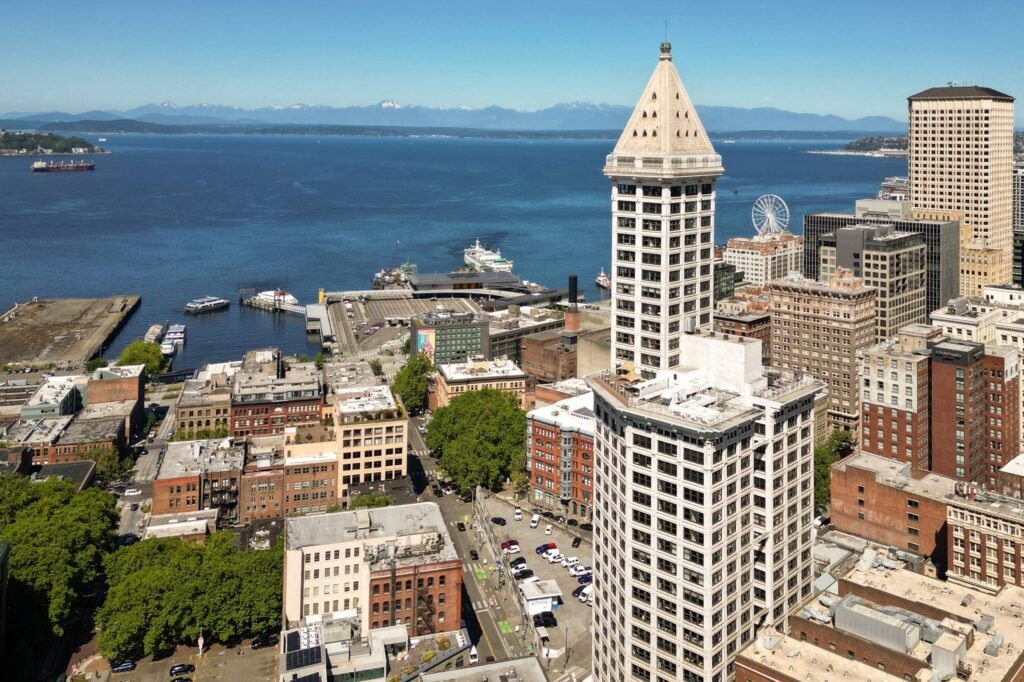
Finished in 1914, Smith Tower was the tallest building west of the Mississippi for decades. Today you can ride the manually operated elevator to the 35th-floor observatory and, in season, the bar there, now called Observatory Bar. The building also stands at the edge of Pioneer Square, so it pairs naturally with the Underground Tour.
- Where: 506 Second Ave
- Cost: Paid observatory ticket; check current rates
Seattle Underground Tour
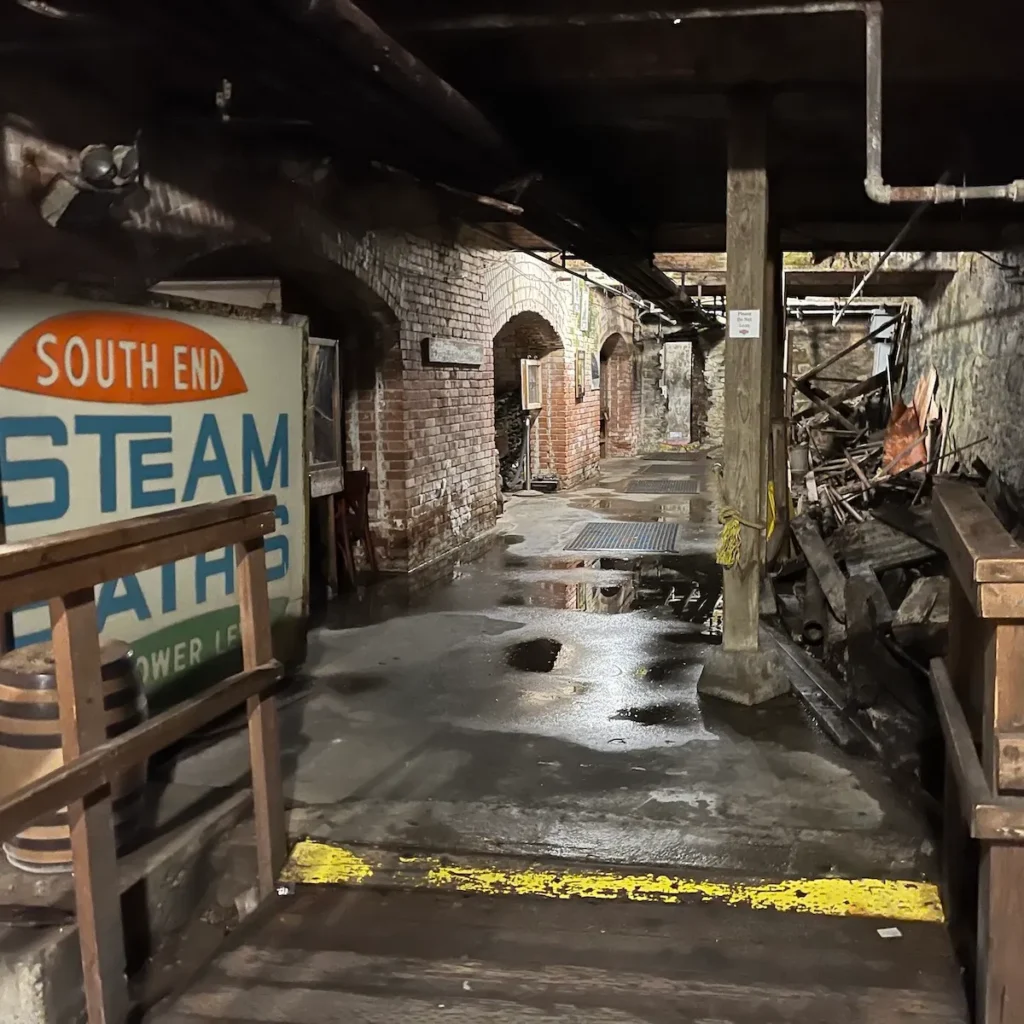
After the Great Seattle Fire of 1889, the city rebuilt its streets one story higher, leaving the old ground-level storefronts below. The guided tour takes you through those buried passages in Pioneer Square, with a heavy dose of humor. It is one of the most distinctive things to do in Seattle, and a good rainy-day option because it happens mostly indoors.
Book ahead on busy weekends and check the official site for current prices.
- Where: Pioneer Square, starting at 608 First Ave
- Cost: Paid; check current prices
Seattle Center and Beyond
Space Needle and Seattle Center
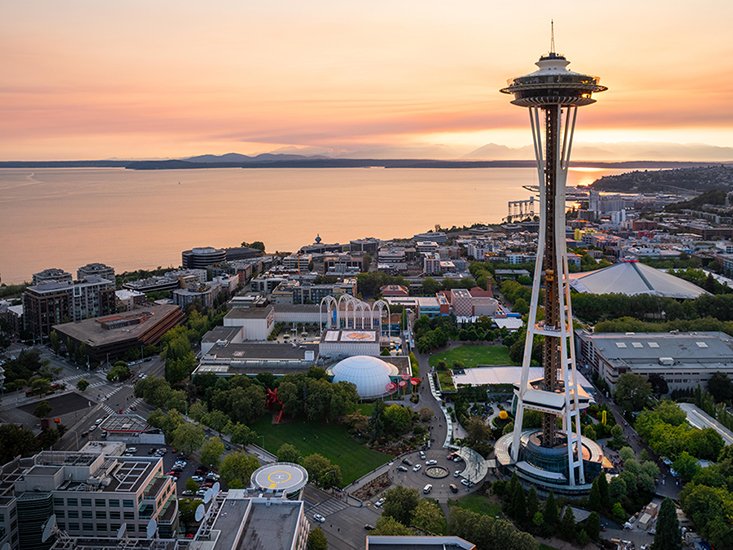
Built for the 1962 World’s Fair, the Space Needle is 605 feet tall, with an observation deck whose rotating glass floor is the main draw. Tickets are pricey, so decide whether you want the view or the photo. From the ground, it is a free and great photo.
The easiest way to get there from downtown is the Seattle Center Monorail, which leaves from Westlake Center and takes about two minutes. Seattle Center itself has plenty of free options beyond the Needle, including the fountain and grounds, and indoor spaces that help on wet days.
- Where: 400 Broad St
- Cost: Paid observation tickets; check current rates. Grounds are free.
Highlight: Take the Monorail from Westlake Center instead of driving. Parking near Seattle Center can cost more than the ride.
Olympic Sculpture Park
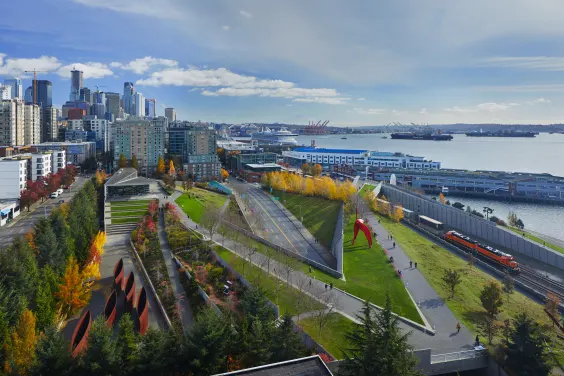
Run by the Seattle Art Museum, this nine-acre waterfront park combines large-scale outdoor sculpture with Elliott Bay and mountain views. It is free and open daily, and it makes a good sunset stop at the north end of the waterfront.
- Where: 2901 Western Ave
- Cost: Free
Getting Around Downtown
Walking covers the market, waterfront, library and art museum. Use the Monorail from Westlake Center for Seattle Center and the Link light rail to reach downtown from the airport. If you are arriving from SeaTac, our One-day itinerary near SeaTac and guide to luggage storage at SeaTac help you plan a layover.
Frequently Asked Questions
How many days do you need in downtown Seattle?
Two days covers the 12 places here comfortably. One day is enough if you pick one area and skip the paid attractions.
What is the best free thing to do downtown?
The waterfront promenade, Pike Place Market, the Central Library and Olympic Sculpture Park are all free.
Is Seattle CityPASS worth it for downtown sights?
It depends on how many paid attractions you plan to visit. Our CityPASS vs. C3 guide walks through the math.
What should I do downtown when it rains?
The Aquarium, Art Museum, Central Library and Underground Tour all work in wet weather. See our indoor ideas for kids at heart for more.
Where are the less touristy spots?
Look for our upcoming guide, Undiscovered Gems in Downtown Seattle.
Conclusion
Start at Pike Place Market in the morning, walk down to the waterfront, and let the weather decide the rest of the day. For more to do in the colder months, see our fall and winter guide to Seattle.
References
- Seattle Great Wheel, official site: https://seattlegreatwheel.com
- Seattle Central Library, Seattle Public Library: https://www.spl.org
- Seattle Art Museum: https://www.seattleartmuseum.org
- Pike Place Market: https://pikeplacemarket.org
- Smith Tower: https://smithtower.com
- Seattle Underground Tour: https://undergroundtour.com
- Space Needle: https://www.spaceneedle.com